Klimley Communications
  • Welcome
  • Biography
    • Biography
    • History of the Consultancy
    • Testimonials
  • PORTFOLIOS
    • Business Writing and Reporting >
      • Diversity Writing and Editing
      • Magazine & Book Editing
      • Blog Writing
    • Art & Culture Writing
  • My Blogs
    • English Lessons
    • Sassy at 70
    • April on Art
    • The Innovator's Voice
  • Contact
  • Top Notch Tutoring
  • I TUTOR ENGLISH

English Lessons and Observations  
......................................FROM A WORD AND LANGUAGE LOVER AND WRITER............... ................. 


How many spaces between sentences? The true answer

10/13/2014

2 Comments

 
Picture
"How many spaces after a period?" I hear this question all the time. It's a big debate that can go on for hours for one simple reason: There's an answer, but it's not set in stone. Let me explain.

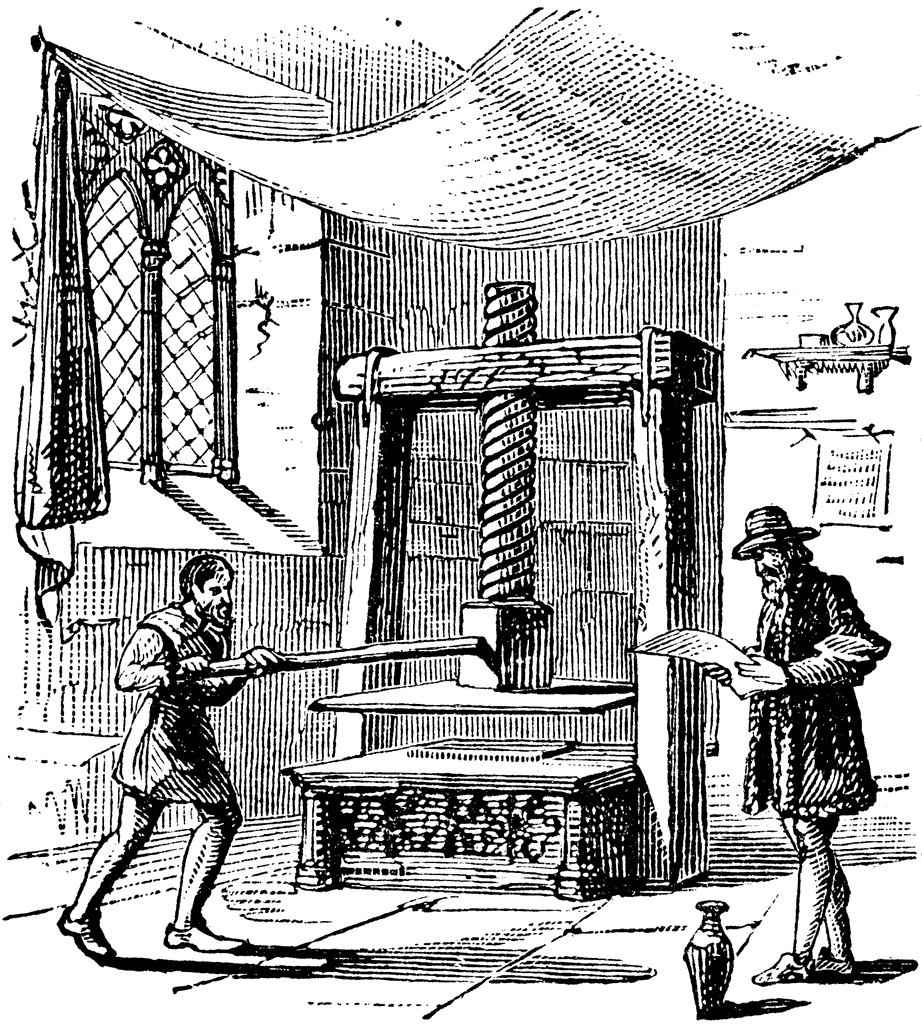
ALL THE WAY BACK TO GUTENBERG

The story goes all the way back to Gutenberg and the invention of movable type. At that time, there were no rules about this and printers used variable spacing after a period. That is, they put in the amount of space they thought was necessary for the reader to know a sentence ended. Gradually English printers came to use an ‘em’ space between sentences, which is  approximately what we would call two spaces after a period. (The French, always proud of any language differences, continued to use only one space.) 

TYPEWRITERS DISRUPT EVERYTHING

Printing moved along for several centuries not changing much as least regarding this question. Then we came to the 19th century and the invention of typewriters. Suddenly, offices could produce documents that looked as if they were printed, but were actually done in-house. In that way, typewriters revolutionized the printing business.  But there was a catch. Typewriters used “monospaced type.” Every letter or character took up the same amount of space on the key. Inconveniently, some letters such as "m" and "w" were wider when typed in a sentence.  They took up more space. So typists began to insert two spaces after the period for clarity. That's where the old "two spaces" after a sentence rule originated.

THE CONVENTION TODAY IS ONE SPACE

Now jump to the 20th century. Mechanical typesetting and computers began to take over. Suddenly, letters took up only as much space as they had to. Mechanical typesetting was very different from typewriter typing. So a single space was wide enough to show the reader that the sentence had ended.  From the mid 20th-century onward, typographers and style experts fell in line with this “one space” convention. Double spacing faded away. Single spacing is the standard today. 

But wait. Diehards in certain fields still insist on double spacing. That's why the question still causes controversy. Certain academics and even some publishing houses (so I've heard, although no one gives precise names) still insist on two spaces.  But in the business world in general, one space prevails. So for now, you can stick to that, and, if anyone asks why, you can put on your "grammar guru" hat and explain it to them.
2 Comments
Tracy Kohnstam
10/15/2014 07:58:51 am

Question. For some reason I still am "old school". That's for the most part. Sometimes I might use both ways in the same document. Is that okay? Or do I have stay consistent with only one way for the grammar to be considered correct?

Reply
April Klimley link
11/23/2014 10:59:34 am

Tracy. Rules like this are aimed at making things clearer for the reader and avoiding confusion. If you use two styles, that could be confusing. So, from that point of view, it's better to use either one space between sentences throughout the entire document (the standard today when using a computer) -- or two if you want to be old fashioned! The Grammar Guru

Reply

Your comment will be posted after it is approved.


Leave a Reply.

    Picture

    Good writing  skills are a cornerstone of success in the academic world, and they are also a major plus in later life.  

    But our recent pandemic
    --and pivot to distance learning--has made it a challenge for many students to move ahead at the expected--or desired--pace.

    If you feel your student could use some extra tutoring, take a look at my information page on this website entitled "The English Tutor" and give me a call or email to find out more about  my composition and reading services. I can help your student not just achieve what is expected, but also advance much further faster.

    April 
     W. Klimley
    June 9, 2021

    [email protected]
    ​917-626-4838

    Archives

    June 2021
    June 2020
    February 2017
    November 2016
    March 2015
    February 2015
    January 2015
    October 2014

    Categories

    All
    Business Writing
    Digital Business World
    Grammar
    Gutenberg
    Training Of Writers
    Writing Seminars

    RSS Feed

April W. Klimley - Klimley Communications
​1301 SW 10th Ave. # E-107, Delray Beach, FL 33444 

  [email protected] or 917.626.4838
  • Welcome
  • Biography
    • Biography
    • History of the Consultancy
    • Testimonials
  • PORTFOLIOS
    • Business Writing and Reporting >
      • Diversity Writing and Editing
      • Magazine & Book Editing
      • Blog Writing
    • Art & Culture Writing
  • My Blogs
    • English Lessons
    • Sassy at 70
    • April on Art
    • The Innovator's Voice
  • Contact
  • Top Notch Tutoring
  • I TUTOR ENGLISH